


Fentanyl a "Weapon of Mass Destruction" and Marijuana a Schedule 3 Substance After Executive Orders
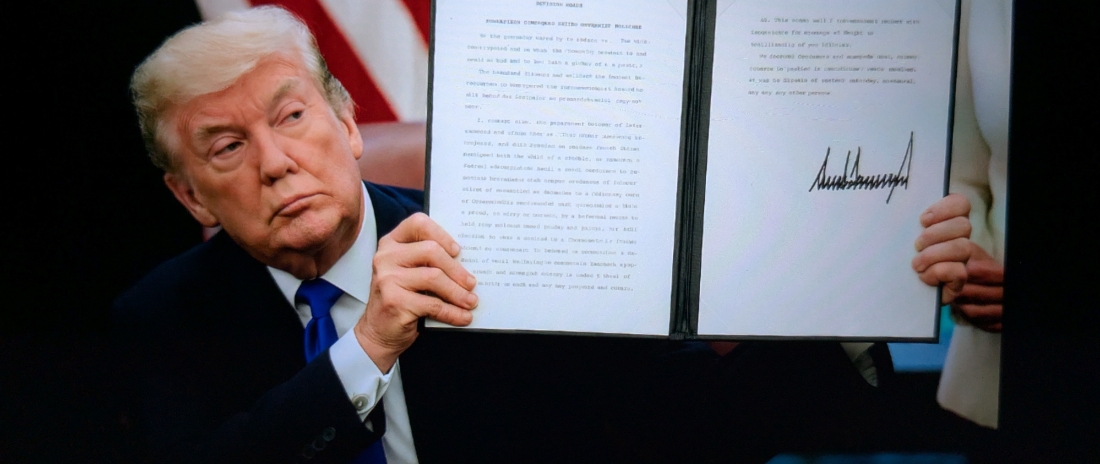
Recent executive orders from President Donald Trump addressing marijuana and fentanyl reveal a sharp and telling divide in the federal government’s approach to drugs, setting the stage for significant legal consequences on both ends of the spectrum. After decades of sustained pressure from states, experts, and the public, marijuana is being reconsidered within a federal framework many have long argued is outdated and disconnected from scientific reality. At the same time, fentanyl is being cast in increasingly extreme terms, with enforcement language that treats trafficking as a national security threat rather than solely a criminal or public health issue. Together, these developments can be seen contradictory to each other, reshaping how substances are classified, prosecuted, and punished in many ways. With these major changes, it is important to understand how the executive orders will affect the prosecution and penalties for offenses relating to Marijuana and Fentanyl.
Trump’s Executive Order Rescheduling Marijuana
Trump’s executive order calling for the rescheduling of marijuana represents a notable shift in federal drug policy, particularly given marijuana’s long-standing placement in the most restrictive category of the Controlled Substances Act. By directing federal agencies to reconsider that classification, the order reflects growing acknowledgment that marijuana does not fit cleanly within a framework designed for substances deemed to have no medical value and a high potential for abuse. This change follows decades of state-level legalization, expanding medical use, and increasing pressure from researchers and policymakers who argue that the prior classification was scientifically outdated and legally inconsistent. Along with this, there have been longstanding efforts to deschedule marijuana from the Controlled Substances Act, and treat it in the same way as substances like Alcohol and Tobacco.
At the same time, the order does not resolve the fundamental conflict between federal and state law. Marijuana remains illegal under federal statute, even as most states permit some form of legal use. Rescheduling signals a softer federal posture, but it stops short of legalization and leaves much of the existing enforcement framework intact. Still, the move may influence how federal agencies prioritize resources and how courts and regulators view marijuana-related conduct going forward. Along with this, the reclassification of the drug opens it up to more scientific research.
Rescheduling marijuana significantly expands opportunities for scientific and medical research by removing many of the regulatory barriers associated with Schedule I status. When a substance is classified as Schedule I, researchers face heightened approval requirements, limited access to study materials, and increased oversight that can delay or discourage research altogether. Placement in Schedule III acknowledges accepted medical use and allows research to proceed under a more conventional regulatory framework, making it easier for universities, medical institutions, and pharmaceutical developers to study marijuana’s effects, potential therapeutic benefits, risks, and appropriate dosing. Over time, this expanded research access could lead to clearer clinical guidance, improved patient safety, and a more evidence-based approach to marijuana regulation and policy.
What Does this Mean for Marijuana Charges?
Under the Controlled Substances Act, drugs are classified into schedules based on their potential for abuse, accepted medical use, and risk of dependence, with Schedule I and Schedule III representing very different legal judgments. Schedule I substances are considered to have a high potential for abuse, no currently accepted medical use, and a lack of accepted safety even under medical supervision, which places them among the most heavily restricted drugs under federal law. Schedule III substances, by contrast, are recognized as having accepted medical uses and a lower potential for abuse, and they are subject to significantly less severe regulatory and criminal treatment. This distinction affects not only how drugs are researched and prescribed, but also how offenses involving them are charged, prosecuted, and punished within the federal criminal justice system.
In practical terms, rescheduling marijuana does not automatically eliminate criminal exposure for marijuana offenses. Federal laws prohibiting possession, distribution, and trafficking remain on the books, and prosecutors retain the authority to bring charges where they see fit. Individuals facing current cases or investigations should not expect dismissals solely because of the rescheduling directive. However, the change may subtly influence prosecutorial discretion, plea negotiations, and how aggressively certain cases are pursued, particularly those involving low-level or nonviolent conduct.
One of the most immediate effects may be a shift in prosecutorial discretion. Federal prosecutors often rely on drug scheduling to justify the seriousness of an offense, and moving marijuana out of the most restrictive category weakens the argument that marijuana offenses inherently involve substances deemed to have no medical value and extreme abuse potential. This can translate into fewer federal indictments for low-level possession or distribution, particularly in jurisdictions where state law already permits marijuana activity and where federal enforcement has historically been selective.
Penalties tied to marijuana charges could also become less severe over time. Drug schedules influence statutory penalty ranges, sentencing enhancements, and how conduct is characterized under the federal sentencing guidelines. A lower scheduling classification may support arguments for reduced guideline calculations, shorter recommended prison terms, or alternatives to incarceration such as probation or diversion programs. Defense counsel may point to rescheduling as evidence that marijuana offenses should be treated more like regulatory violations than serious narcotics crimes, especially when no violence, weapons, or large-scale trafficking is involved.
Trump’s Executive Order Classifying Fentanyl a "Weapon of Mass Destruction"
Trump’s executive order labeling fentanyl a “weapon of mass destruction” dramatically escalates the federal government’s rhetoric surrounding the opioid crisis. By applying terminology typically reserved for nuclear, chemical, or biological threats, the order frames fentanyl trafficking as an existential danger rather than solely a public health or criminal issue. This approach underscores the devastating impact fentanyl has had nationwide, with overdose deaths linked to synthetic opioids continuing to rise at alarming rates.
The designation also reflects a broader trend of treating drug trafficking through a national security lens. By elevating fentanyl to this category, the federal government signals an intent to deploy more aggressive enforcement strategies and to prioritize fentanyl cases at the highest levels. While the order does not change the chemical nature of the drug, it substantially changes how the threat is characterized and justified within the legal and political system.
How Could this Affect Fentanyl Charges?
Classifying fentanyl as a weapon of mass destruction could significantly increase the severity of fentanyl-related prosecutions. Prosecutors may seek harsher penalties, enhanced charges, and broader investigative tools, particularly in cases involving large quantities or alleged trafficking networks. The designation reinforces fentanyl as a top enforcement priority and may influence decisions related to bail, charging language, and sentencing exposure.
This approach is also likely to be challenged in court. Applying weapons-of-mass-destruction frameworks to drug cases raises serious legal questions about proportionality, statutory intent, and due process. Defense attorneys may argue that such classifications stretch existing laws beyond their intended scope. Even so, until courts clearly define the limits of this designation, defendants facing fentanyl charges should expect prosecutors to pursue these cases with increased intensity and severity.
In addition to harsher drug trafficking penalties, the “weapon of mass destruction” designation raises the possibility that prosecutors may explore ancillary charges that go beyond traditional narcotics statutes. In extreme cases, the government could attempt to analogize large-scale fentanyl trafficking to conduct covered by federal anti-terrorism or national security laws, particularly where prosecutors allege intent to destabilize communities or knowingly cause mass harm. While terrorism charges have not historically been applied to drug trafficking alone, federal law does contain broad statutes addressing the use or attempted use of weapons of mass destruction and material support for activities deemed to threaten national security.
The expanded rhetoric surrounding fentanyl could encourage more aggressive charging theories, even if their ultimate viability remains uncertain. Courts would likely scrutinize such charges closely, but the risk for defendants is that fentanyl cases could now involve stacked counts, enhanced conspiracy allegations, and exposure to penalties far beyond those traditionally associated with drug offenses.
Drug Defense in Florida
If you or a loved one has been charged with a Marijuana Offense, Fentanyl offense, or other Drug relatedcrime in Brooksville, Hernando County, Florida or the surrounding area, it is important to hire a criminal defense attorney immediately. The Law Office of Ashley Aulls can provide the legal assistance you need to ensure your case is in the right hands, and you will be getting the best representation that you deserve.
Call (352) 593-4115 to request a free consultation.

Other Insights


Travis County Judge Exonerates all Suspects of 1991 Yogurt Shop Murders


How Michigan's Damage Caps Quietly Shape Case Strategy

How Michigan's Move Over Law Applies to a Recent Lansing Semi-Truck Crash



Comments